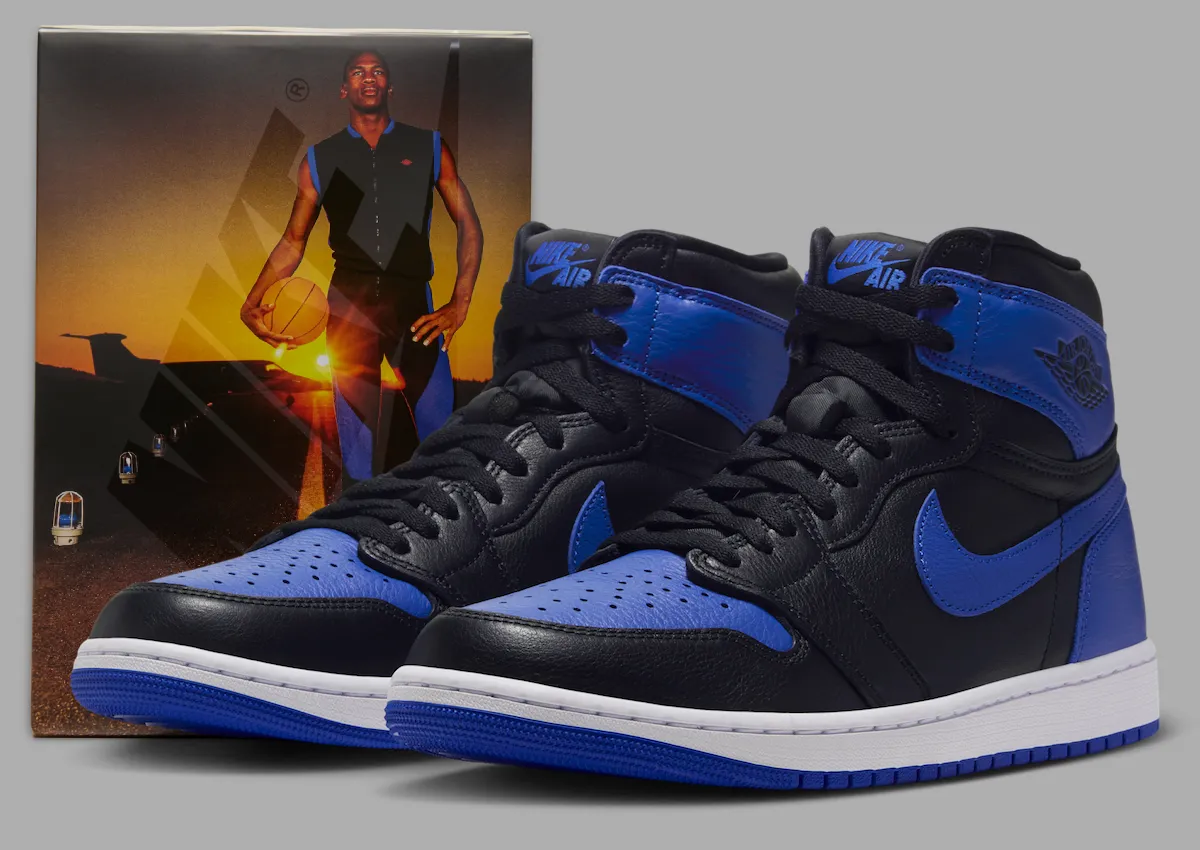
Jordan Brand is not Michael Jordan's company. It is a division of Nike, Inc. that carries his name, his silhouette and his number, and pays him for the privilege. Everything else people believe about the Jumpman, that Michael owns it, that he runs it, that the money is his, is a story the brand has been happy to let stand. The actual structure is simpler and colder: Nike owns the trademarks, the factories and the revenue, and Jordan owns a royalty stream that has made him a billionaire without giving him a single share of the thing.
September 9, 1997
Nike announced the spin-off in New York on September 9, 1997, with Jordan standing next to Ahmad Rashad and five players: Ray Allen of the Bucks, Eddie Jones of the Lakers, Vin Baker of the Sonics, Michael Finley of the Mavericks and Derek Anderson of the Cavaliers, per Sports Illustrated. The first product was the Air Jordan 13, plus Team Jordan shoes like the Jumpman Pro Quick and Pro Strong in the five players' team colors. Retail debut was November 1, 1997. Andscape reports analysts projected more than $300 million in worldwide revenue for fiscal 1998, on top of the $70 million the Air Jordan line had done in fiscal 1997 as a Nike sub-line.
The original five were chosen by Jordan personally. Finley has said Jordan told them each had a part of his game he liked. None of them got a signature shoe. Allen played 18 seasons in the brand and has said it never mattered to him. That is the template Jordan Brand has run ever since: a roster that wears the Jumpman and sells Jordan, not itself.
$7 billion and falling
The brand's scale is Nike's best-kept open secret. Sportico reported that in the fiscal year ending May 2025, Jordan Brand revenue "fell 16% for the year to $7.3 billion," the worst-performing segment of a Nike that did $46.3 billion overall. The same piece notes the brand had doubled between 2020 and 2024 before the drop. A 16 percent decline on a $7 billion base is a bigger number than most sportswear companies gross. Nike's new leadership has called the Jumpman a pillar of the turnaround, which is a polite way of saying the company over-produced Jordan 1s and 4s and flooded its own resale market.
Jordan's share of that is a royalty. Sportico estimated he earned roughly $300 million in 2024 without playing a game, "predominantly from Nike royalties," and pegged his cut at a conservative 4 percent of revenue. Four percent of $7 billion is $280 million. That is the largest endorsement income in sports history. It is also 4 percent. The other 96 goes to Beaverton.
Who owns the Jumpman
The Jumpman logo, the silhouette from a 1984 Life magazine photo shoot recreated for Nike in 1985, is a Nike trademark. Nike files and defends it, most famously against the photographer Jacobus Rentmeester, who sued in 2015 and lost. Jordan's name and likeness are licensed to Nike under the endorsement contract that began in 1984 and has been renewed on terms neither side discloses. When Nike says "Jordan Brand," it means a business unit with its own president reporting up through Nike's org chart. When Jordan says it, he means his legacy. Both are correct. Only one of them can sell the company.
This matters when you look at the athletes the brand signs today. A player who joins Jordan Brand is signing with Nike, wearing a logo Nike owns, and hoping for a signature line that Nike will produce. The "Black-owned brand" framing that follows the Jumpman around is wrong on the facts. It is a Black-fronted brand, with Black executives in its history, generating Black-culture demand, inside a company whose ownership looks like any other S&P 500 stock.
What Michael did own
Jordan's actual ownership plays happened elsewhere. He bought majority control of the Charlotte Hornets in 2010 and sold in 2023 at a $3 billion valuation, per Sportico. That, not the Jumpman, is where his equity was. The Nike deal made him rich; the team made him an owner. The difference is the whole lesson of the Jordan Brand story, and the brand's next generation of signature athletes, Jayson Tatum, Luka Dončić and Zion Williamson, inherit the royalty model, not the equity one.
The take
Jordan Brand is the most successful licensing deal in the history of Black labor: a man's image, sold by a company he does not own, generating more money for that company every year than most nations' sports budgets. Jordan negotiated the best version of that deal anyone ever has. It is still that deal. When the culture talks about the Jumpman as "ours," it should be clear-eyed about what that means. The demand is ours. The trademark is Nike's.
## Sources - Jordan Brand Launched 25 Years Ago Today — Sports Illustrated, September 9, 2022 - How Michael Jordan's original starting five became Team Jordan's first stars — Andscape, October 24, 2017 - Nike's Jordan Brand Revenue Declines 16% During Fiscal Year — Sportico, June 26, 2025 - How Michael Jordan Made $300 Million in 2024 — Sportico, 2025