The Air Jordan 15, 16 and 17 have a problem the 1 through 14 never had: there is no championship in them. The 15 dropped with Jordan retired. The 16 launched while he was a Wizards executive, then got a surprise season when he un-retired. The 17 is the shoe of a 38-year-old averaging 22 a night for a lottery team. For twenty years that made them the discount rack of the catalog. This fall Jordan Brand is retroing all three in a "Black Pack," and the reason is not nostalgia. It is that the Bulls-era well is running dry.
The 15: a jet for a man in a suit
Tinker Hatfield styled the 15 after the X-15 rocket plane, "the world's fastest manned aircraft to date," and built the upper from woven Kevlar with a tongue that stuck out like Jordan's own on a drive, per Nike's history page. It retailed at $150 in 1999. Jordan never played in it. He wore it with suits, which Nike now frames as "brash sophistication in business," and which at the time read as a shoe company trying to sell a signature model for a signature athlete who had left the sport. The 15 was the first Jordan sold entirely on the strength of the logo.
The 16: the shroud and the surprise
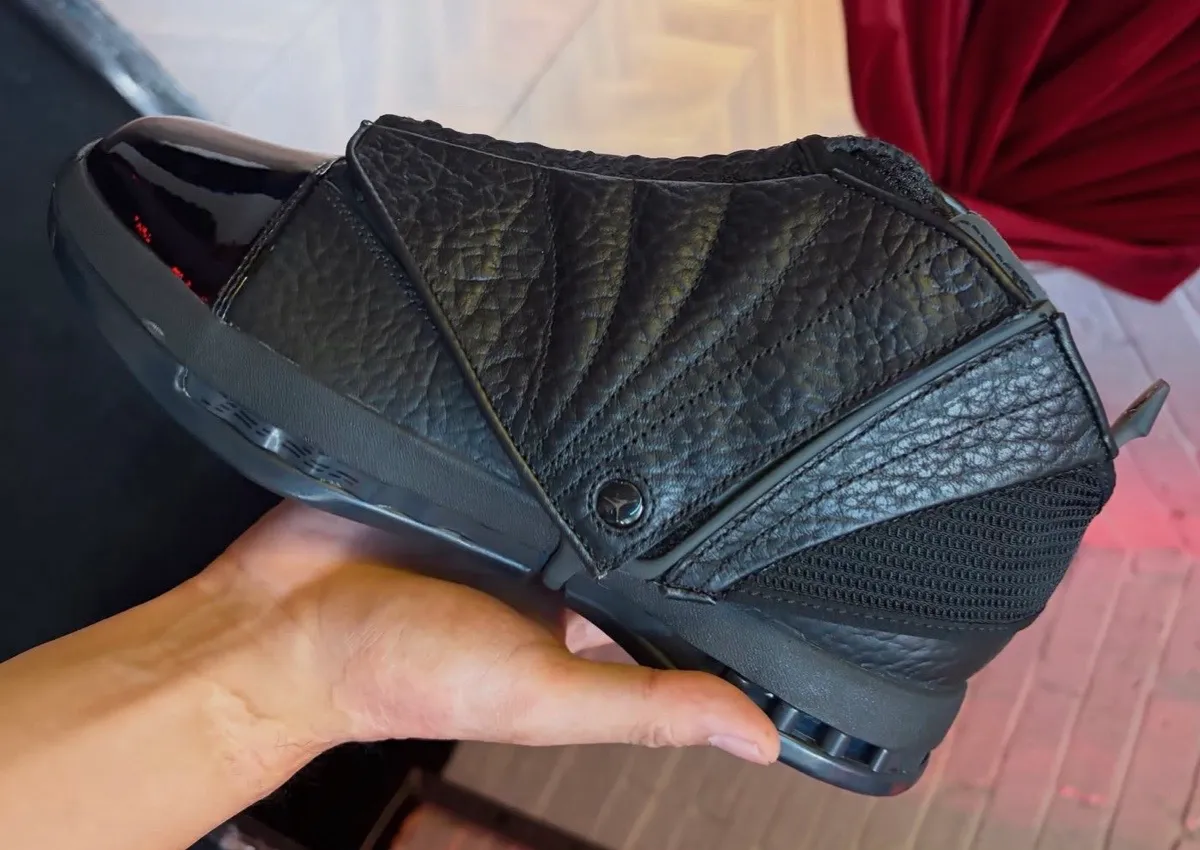
Wilson Smith III took over from Hatfield for the 16, released in 2001 at $160, and gave it the detachable magnetic shroud that let it "transition from hardwood performance to fashion staple," per Nike. The original Black/Varsity Red pair (136059-061) was designed for a Wizards president. Then the president came back as a player in the 2001 preseason, and a shoe built for boardrooms was suddenly on the floor at MCI Center. Smith was the first Black designer to lead an Air Jordan, which is a fact the brand mentions rarely and this site will mention every time.
The 17: $200 and a briefcase
The 17 is the one people remember, if they remember any of these, because of the packaging. Smith designed it around jazz, with musical notes on the lace caps and lines that flowed like an improvised solo, and Nike sold it in a metal briefcase with a CD-ROM guide to the design, per Nike's history. The price was $200, the most expensive Air Jordan ever at that point, and Sneaker Files notes the line was filled out with $150 lows and $100 mules the same year. That was 2002. A $200 basketball shoe in a briefcase, for a Wizards player, at the bottom of a recession. The 17 was the brand testing how far the logo could stretch, and the answer, at the time, was not that far.
Why they were unloved
The post-Bulls Jordans failed the only test the retro market cares about: a highlight. The Concord has 72-10. The 12 has the Flu Game. The 14 has the shot. The 15 has Jordan in a suit, the 16 has a comeback that ended in two lottery seasons, and the 17 has a briefcase. Collectors bought the moment, not the shoe, and Jordan Brand knew it, which is why the 15 through 17 spent years appearing mostly in Countdown Packs and one-off colorways like the 17 Low "Lightning" while the 1, 3, 4 and 11 got annual holiday slots.
Why now
The Black Pack is the tell. Sneaker News reported the lineup in January 2026: the 14 Low and 16 on October 1, the 15 and 17 Low on November 2, each in black with pony hair, ostrich and snakeskin textures, sold through SNKRS and NBHD accounts. The 16 "Black Pack" first look is already on The Lane at $245. Note the price: a shoe that could not move at $160 in 2001 is being asked to move at $245 in 2026, and the bet is that a market which has bought every Bred 1 and Concord 11 retro for a decade is finally ready to buy the models it skipped.
That is also a statement about supply. Jordan Brand can only retro the Bulls-era shoes so many times before the resale premium collapses, and it has been collapsing. The Wizards years are the last untouched inventory of Michael Jordan on a basketball court. The brand held them back for twenty years and is releasing them now because the story stock is otherwise spent.
The take
The 15, 16 and 17 are the honest Jordans. They were made for a business, not a title, and the business is finally admitting it. Wilson Smith III designed two of the three, a Black designer at a brand named for a Black athlete, and neither of them got the credit a Tinker shoe gets. If the Black Pack sells, the credit should go where it belongs: to the designer who made a Wizards shoe worth $245, and to the customer who, after two decades, decided the logo was enough.
## Sources - The History of the Air Jordan 15 — Nike - The History of the Air Jordan 16 — Nike - The History of the Air Jordan 17 — Nike - Air Jordan 17 XVII History — Sneaker Files - Air Jordan Retro "Black Pack" Releasing Holiday 2026 — Sneaker News, January 23, 2026